Dr. Rebecca Hains
Author, professor and speaker | Children's media culture, media literacy, and media criticism

Black girls are missing, in Nigeria and at home. #BringBackOurGirls
Two weeks ago, a Nigerian high school was raided by armed militants from the terrifying Islamist group Boko Haram. These terrorists kidnapped more than 200 Nigerian girls—allegedly to sell them as brides for about $12 USD each. It’s a devastating case of human trafficking, but the girls’ distraught families say their pleas for governmental assistance in recovering their stolen daughters have fallen on deaf ears.
 After a failed attempt to rescue their daughters themselves, the families went public with their story. Disturbingly, the story did not gain the instant traction with the news media that it should have—another reminder of the fact that the media tends to overlook cases of abducted girls of color. Studies have found that white girls who are stolen in “stereotypical” abduction scenarios (such as that endured by Elizabeth Smart) receive disproportionate media attention: Nearly 800,000 children are reported missing every year in the U.S. alone, of which only about 115 are stereotypical. Yet black girls’ stories—and those of other girls of color—are rarely reported on.
But now, finally, in the case of Nigeria, the world is listening. The girls’ dead-of-night kidnapping has made mainstream international news, and public outcry is visible across social media channels. For example, a Change.org petition has gathered nearly 150,000 signatures calling upon the Nigerian government to stop their political posturing and bring these girls home.
Simultaneously, I can’t help but think of their case in the context of another situation, which I learned about this week at the White House Research Conference on Girls, held by the White House Council on Women and Girls. At a discussion during the conference, several attendees spoke to the need for increased national attention to the plight of black girls in Atlanta, Georgia, USA, where reports indicate that about 200 girls go missing every month—victims of human trafficking who are essentially sold, like the Nigerian high school girls, into sexual slavery. Yet this crisis in Atlanta is also flying below the national radar. Read More
FOX43 legitimizes KKK activities with reprehensible Facebook post
In response to a series of local break-ins in central Pennsylvaina, a local organization has formed a neighborhood watch group. On the surface, that sounds like a great idea: Neighborhood watch groups can be an effective crime deterrent. They encourage community members to keep an eye out for one another and to contact law enforcement if there’s any trouble.
But what if the neighborhood watch group is being planned by the Ku Klux Klan? The KKK is widely known as a white supremacy organization, and it has a long history of practicing hate crimes under the guise of vigilante justice. For this reason, people of color might feel that neighborhoods are better off without a neighborhood watch if the KKK is in charge. Racial profiling might be a greater threat to their health and well-being than the break-ins that have been going on.
That’s why it’s preposterous that Central Pennsylvania station FOX43 posed the following question on an image of the KKK’s local neighborhood watch flyer to their facebook page:

“Members of the KKK distributed this flyer to neighbors living along Ridge Road, in Fairview Twp. Do you think police should be the only people to look out for your neighborhood? What are your thoughts?”
What’s the problem with pink and princess? The marketing, not the moms.
This week, New York and Slate published pieces asking why so many moms have a problem with pink and with princesses.
“What’s the problem with pink, anyway?” griped Yael Kohen in New York. Then, building upon Kohen’s piece, Slate senior editor Allison Benedikt demanded: “What is it with you moms of girls? I have never met a single one of you who isn’t tortured about pink and princesses.” Her annoyance is palpable.
Both writers proceed to defend all things pink and princess. “We treat pink — and the girls who like it — with […] condescension,” Kohen states, while Benedikt adds, “Moms of daughters need to chill out.”
Let’s take a step back, please. I am the author of a forthcoming book called The Princess Problem: Guiding Our Girls Through the Princess-Obsessed Years, and Kohen and Benedikt’s arguments are wrong on several levels. By pontificating on the subject without actually talking to the moms they’re criticizing, they’ve missed the point. Having interviewed more than 50 parents about princess culture, and dozens of experts as well, I’d like to state this categorically: No one is blaming girls. To suggest otherwise is to make a straw man argument that distracts from the real issues at hand.
Furthermore: No one thinks that pink is inherently a problem. Pink is not the “color of oppression,” as Benedick charges sarcastically.
No, no—the problem is not with the girls or the color pink. It’s with the marketing, because that marketing is reducing girls’ choices. Read More
Can girls be doctors? Preschool art project says “no.” (Reader story)
Why are we still teaching our children that DOCTOR = MALE in 2014? There’s no good reason.
A guest post by reader Julie Danahy Hebeisen
My friend Julie is a non-profit event planner in the Boston area and a married first-time mother to 2-year-old Vivian, and a regular reader of this blog. When she told me that pulled an infuriating “art project” out of her daughter’s preschool backpack, I invited her to write about her experience. Here’s Julie’s story.
I have a couple of friends who are medical doctors. Those friends are female. Their strength and intellect has always impressed me, not because they are female, but because the work they do is awe inspiring.
At 2.7 years old, my daughter began the transition into preschool. She is a sponge, eyes wide open.
When she was born, they plopped her on my chest (ready, set, LIFE!) and she quite literally locked eyes with me in a penetrating stare, as if to say, “Ok Mom, it’s on!” I was not the only one that noticed; the nurses had a laugh. That moment was a not-so-quiet indicator of the kind of child she would grow to be: wildly observant, challenging, and completely open to learning from the world around her.
Yesterday, as I do three days per week, I opened her knapsack to reap the treasures of the day. Sometimes a notice, a dirty shirt, a half-eaten something, but also ART! The art projects are my favorite–a little window into what she is learning, and how her mind embraces it creatively. Most days, I smooth out the wrinkles and find a spot for it on the fridge or the on the door to her play cave.
Today was different. Read More
Review: “Prison Baby” by Deborah Jiang Stein
In a system that treats drug addicts as criminals—that incarcerates people struggling with addiction, instead of recognizing addiction as a complex disease and providing treatment— injustice piles upon injustice. The war on drugs has destroyed families, tearing parents and children apart. To what end?

Prison Baby is the memoir of Deborah Jiang Stein, a woman born in prison. Her mother was an incarcerated heroin addict. Jiang Stein’s memoir documents a difficult journey. She begins with her childhood discovery of the circumstances of her birth—a dark secret she was never meant to know. She then details the devastation and trauma that stemmed from her early, state-imposed separation from her mother—which was compounded by the insufficient resources available to her and her well-meaning adoptive family during her childhood.
Massachusetts declares upskirt photos legal; outrage ensues
This week, Massachusetts’ Supreme Judicial Court has ruled that upskirt photographs are legal, sparking outrage across Massachusetts and beyond.
Upskirt photos are photographs taken from beneath a woman’s skirt to capture an image of her crotch area and underwear without her consent. They are a gross violation of privacy—but the court has decided that, as state law currently stands, women wearing skirts in public do not have a reasonable expectation of privacy.

Okay to upskirt? Surreptitiously taking photographs up women’s skirts is now legal in Massachusetts.
This decision came about when the state’s highest court ruled on the case of a man who secretly snapped photographs up women’s skirts and dresses on public transit in 2010. The court argued that because of the way the law (Mass. Gen. Laws ch. 272. sec. 105: Photographing, videotaping, or electronically surveilling partially nude or nude person; exceptions; punishment) is written, the man in question did not break the law, because 1) women do not have a reasonable assumption to privacy on public transit and 2) the law protects nude women, and women wearing skirts are not nude. Read More
Loving Your Body for your Kids’ Sakes, Too: The Body Image Survival Guide for Parents [Giveaway]
At Valentine’s Day, we talk a lot about loving other people. But what about loving ourselves?
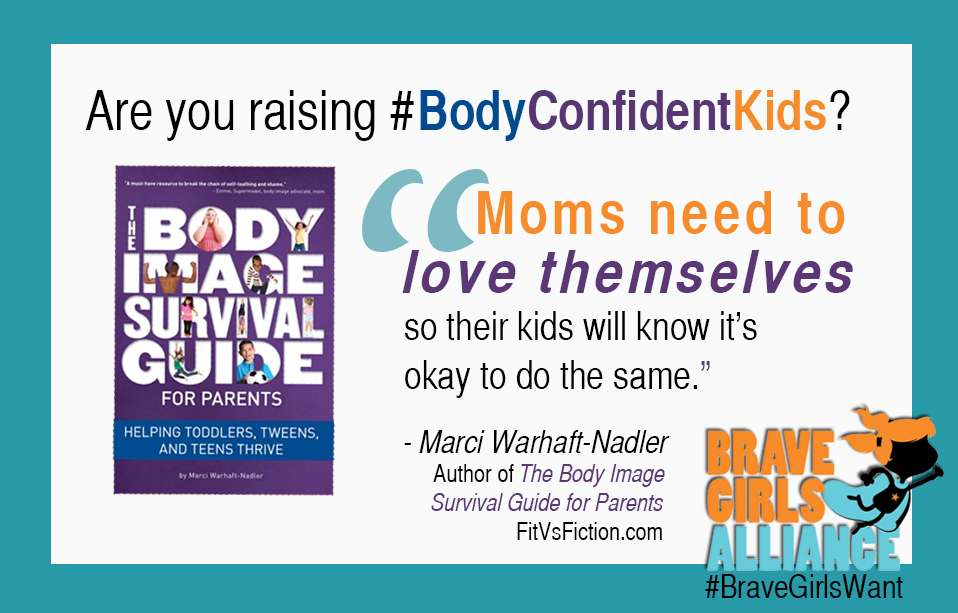
As Marci Warhaft-Nadler, body image expert and the author of The Body Image Survival Guide for Parents: Helping Toddlers, Tweens and Teens Thrive, points out: “Moms need to love themselves so their kids will know it’s okay to do the same.” It’s such an important message to remember.
“Kids as young as 5 and 6 years old are already feeling like being themselves is just not good enough,” Warhaft-Nadler explains. “This is leading them down some pretty dangerous paths. Instead of waiting until we see a problem starting, we need to act now. I’m teaching parents how to empower their kids to love who they are and believe in everything can they be, instead of feeling like they don’t measure up to who they think society expects them to be.” Read More
Why the Daily Beast article about Dylan Farrow and Woody Allen is dangerously irresponsible
In recent days, the long-forgotten allegations that Woody Allen sexually abused his stepdaughter Dylan Farrow have resurfaced. Now, in a 5,636-word article in The Daily Beast, Robert B. Weide—producer of the PBS special Woody Allen: A Documentary—has come out swinging.
In so doing, Weide has proven himself to be an irresponsible, arrogant man.
The crux of his argument is this: Mia Farrow is a liar and a cheat who probably planted false memories in Dylan’s mind. How does Weide know this? Well, he explains, he produced a whole documentary about Woody Allen. A two-part documentary! So, you see, he knows things.
Some of the things he says he knows:
- That the public has the facts wrong about Woody Allen’s relationship with Mia Farrow’s daughter Soon-Yi Previn. (In other words, Weide knows more than the public does about Allen’s private life.)
- That Mia Farrow may have been cheating on Woody Allen during their relationship. (In other words, Weide knows Mia Farrow is not to be trusted.)
- That Woody Allen is a claustrophobe, making it unlikely that he would have preyed upon a young Dylan Farrow in an attic, of all places. (In other words, Weide knows Dylan Farrow’s allegations just don’t sound right.)
- That the evidentiary videotape Mia Farrow made of young Dylan explaining what Allen did to her in that attic contains several starts and stops—so Weide asserts it’s possible that Mia was coaching her daughter’s words off-camera between segments. (Again, Weide knows Mia Farrow is not to be trusted.)
Perhaps most importantly, Weide knows that he’s engaging in victim-blaming—but he’s doing it anyway. He states: “I know I’m treading a delicate path here, and opening myself up to accusations of ‘blaming the victim.’ However, I’m merely floating scenarios to consider, and you can think what you will.”
 The hubris behind this statement is staggering. Floating alternative scenarios to contradict the testimony of a survivor of sexual abuse is not something one “merely” does. It’s actually a big deal—and a dangerously irresponsible thing to do.
“Is my son smart?” “Is my daughter skinny?” Google Searches Reveal Parents’ Gender Biases
According to a recent New York Times op-ed, “Google, Tell Me, Is My Son a Genius?”, parents’ Google search trends teach us a lot about parents’ biases towards their sons and daughters. Specifically, parents tend to search the internet for information affirming their sons’ brilliance, but when it comes to their daughters, they focus on physical appearances—revealing our deeply held cultural beliefs that boys should be smart and girls should be pretty.
Internalized sexism is alive and well in America today, embedded in the subconscious of well-intended parents.
Now, because I’m a professor with an interest in girls’ media culture, I read a lot of scholarly studies about girls’ socialization. So when I read this op-ed, I immediately thought of studies that show how parents’ unspoken biases can harm their daughters. Specifically, researchers have found that when mothers feel critical about their daughters’ bodies, their daughters are significantly more likely to have poor body esteem—even if the mothers have kept those critical feelings to themselves! Our kids are savvy and attuned to us; they can pick up on our unstated feelings.
Therefore, if Seth Stephens-Davidowitz’s op-ed is right—if parents across the U.S. are asking Google if their daughters are thin and pretty—daughters across the nation must be feeling pretty badly about their bodies, even if they never catch wind of their parents’ search strings.
How heartbreaking. Read More
Disney Princess Lingerie Goes Viral
This weekend, no fewer than a dozen people sent me links to this Jezebel article about Disney Princess lingerie being sold by a Japanese retailer. The images were also all over my facebook feed. Check them out:

Although this line is Japanese and is not available here in the States, it’s yet another example of Disney Princess lifestyle branding — an extension of the Disney Princess brand into ever-more-personal realms. The goal of such marketing is to encourage consumers to have a deep identification with the brand—to make the brand central to one’ own identity.
Some people (including the author of the piece at Jezebel) questioned whether these could possibly be licensed products that have the blessing of Disney. One commenter was doubtful, noting that princesses don’t even look right—perhaps they’re knock-offs? But, no—these are actually the most current versions of the Princesses available in Disney Consumer Products Division merchandise, as found on disneyprincess.com.
So, I chatted with my friend Satomi about the ads. She lives in Japan and was already familiar with the company selling these items. “These are sold at ‘Belle Maison,’ a pretty big mail order company,” Satomi explained. “I actually have its wish book right in front of me. It was from a project that people could apply to and if their designs were chosen, they were commercialized.” Read More
 Dr. Rebecca Hains
You must be logged in to post a comment.