Dr. Rebecca Hains
Author, professor and speaker | Children's media culture, media literacy, and media criticism

An Open Letter to Justin Lookadoo
By Jennifer Shewmaker and Dae Sheridan
Dear Mr. Lookadoo,
We (along with most of the internet) recently heard about your presentation at Richardson High School. The students’ outrage shed light on your views of the “dateability” of children and how rigid, harmful notions of gender roles are supposedly espoused by God.
As mothers, university professors, specialists in the field of psychology, mental health, sexuality and gender for almost 20 years, and yes, Christians, we are taken aback by and incredibly disappointed in your message.
You say on your Facebook page that you spent “a lot of time” studying and you are “always researching and finding the edge that will make (your) programs current and relevant.” That seems strange because what you teach about “how gender differences impact the development of the human brain” doesn’t seem to be supported by any of the most recent research in either psychology or neuroscience. Hmmm. Don’t believe us? Check out Dr. Lise Eliot’s and Dr. Janet Shibley Hyde’s research. It’s all there, Justin, just waiting to be discovered. Ever read Illusions of Gender by Dr. Cordelia Fine? You might want to look into that as well. Read More
WATCH: Rebecca Hains discusses Lululemon body-shaming controversy on TV News
Yesterday, I discussed the Lululemon controversy (and the petition that Marci Warhaft-Nadler and I launched) with both FOX 25 Boston and WBZ-TV (CBS) Boston. Have a look!
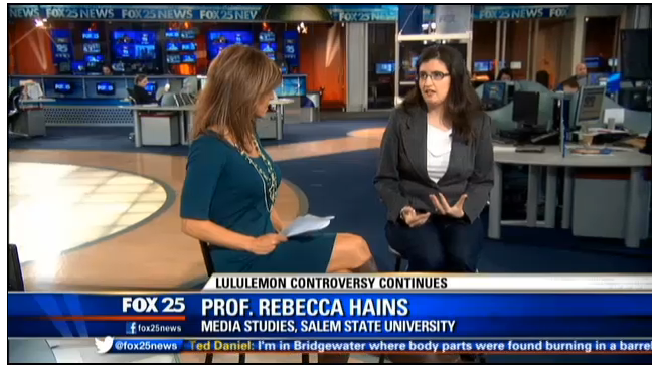
FOX 25 Boston: Salem State Professor to Lululemon CEO: Change Your Business Practices
(4 minutes)
—
 CBS Boston: Salem State Professor Demands Apology From Lululemon CEO
(2 minutes)
Unbelievable: Lululemon founder thinks career women bring cancer on themselves.

These thighs are ideal for Lululemon pants.
According to Lululemon founder Chip Wilson, when his $100 yoga pants wear out more quickly than his cheaper competitors’ pants do, it’s women’s fault. If only women were more like stick figures! Then our thighs wouldn’t be so destructive.
This just in: In 2009, Chip wrote a blog post in which he blamed women for their own breast cancer, too. Turns out his penchant for blaming women is nothing new.
According to Chip’s view of the world, breast cancer is the fault of “cigarette-smoking Power Women who were on the pill” who were “taking on the stress previously left to men in the working world.” (Note: yesterday afternoon, the post was scrubbed from his blog, but it can still be found with the Internet Archive.)
Who knew that being the tenth-richest man in Canada makes Wilson qualified to determine that sexually active career women bring cancer on themselves??? It’s outrageous. Read More
A message to Lululemon Founder Chip Wilson: Stop Shaming Women’s Bodies!
Petition cross-posted from Change.org
Lululemon Founder Chip Wilson: Stop Shaming Women’s Bodies. It’s time to apologize and de-segregate your stores!
 Does Lululemon want women to be comfortable in their clothing, or uncomfortable in our own bodies? Lululemon keeps shaming women’s bodies—and this must stop.
In August, insiders reported that Lululemon stores keep their largest items—sizes 10 and 12—segregated from smaller sizes. Shunning larger women is part of their brand strategy–a shameful thing to do.
Now, founder Chip Wilson is making matters worse: he claims that when Lululemon pants wear out too quickly, it’s because the wearers’ bodies aren’t built right for the brand: The problem is that their thighs rub together.
We’ve got news for Wilson: even though the “thigh gap” has become trendy and desirable among girls and young women, for the vast majority of us, it is absolutely unattainable in a healthy way. Those who chase the thigh gap are at increased risk of eating disorders. Read More
School suspends teen boy for carrying purse. Why???

Boy with handbag: a menace to society?
For several weeks, an eighth-grade boy outside of Kansas City has been expressing his individuality by carrying a floral-print Vera Bradley purse. But yesterday, his assistant principal demanded he remove it. The boy refused, and he was immediately suspended from school.
This raises a question: Why is it a problem for a boy to carry a purse instead of a backpack if he wants to? By breaking gender stereotypes, he’s not hurting anyone. Instead, he’s showing the world that he has good self-esteem and self-confidence—that he is secure his identity.
Unfortunately, his school administrators’ actions show that they want to force a 13-year-old kid into stereotypical masculinity. Apparently, they value gender conformity over creativity and individuality. Read More
Role Models Reimagined as Disney Princesses: A Q&A with Artist David Trumble

In the midst of the “Sexy Merida” controversy back in May, cartoonist David Trumble posted a satirical set of cartoons to the Huffington Post. His cartoons imagined how Disney’s Consumer Product Division would redesign other female role models to fit the Disney Princess mold. (The answer: more hair, bigger eyes, narrow waists, and sparkles!!!)

10 Real-World Princesses Who Don’t Need Disney Glitter. L to R: Marie Curie; Anne Frank; Ruth Bader Ginsberg; Harriet Tubman; Malala Yousafzai; Hillary Clinton; Jane Goodall; Gloria Steinem; Rosa Parks; Susan B. Anthony. Copyright David Trumble, 2013. Used with permission.
Last week, Women You Should Know wrote about Trumble’s project, and it went viral. The WYSK article gained a million page views in a matter of days, while a post by Jezebel captured 85,000 views in 24 hours.
I’ve known about Trumble’s project since he first posted it; I even included it in my post about how cartoonists and animators were responding to the “Sexy Merida” debacle. But lately, with his project going viral, everyone has been messaging me about it. So I’ve followed the reception of his satire with much interest.

Disconcerting satire: Anne Frank, Disney Princess-style. Copyright David Trumble 2013. Used with permission.
A lot of people get it—but a lot of people don’t. (It doesn’t help that the Jezebel post presented his cartoons without quoting him on his original intent, creating some confusion.) And many people who say they understand his point nevertheless take issue with it for various reasons. Some say he didn’t take the satire far enough; other say he went too far. A recurring complaint is that by portraying Anne Frank in princess style, he has crossed a line unnecessarily.
Interestingly, a few commenters have even written that when their daughters walked past their computers and glimpsed these images, the girls were drawn to them. When the girls started asking questions about the people depicted, some commenters said they took advantage of the opportunity to teach their daughters about these important women. From a media studies and parenting perspective, this intrigues me.
Anyhow, given the project’s newfound success in the blogosphere and the mixed reception it has received, I was interested in learning more about Trumble’s intentions, his process in developing the project, and his thoughts on people’s varied reactions in recent days. I contacted him, and he graciously agreed to answer a few questions for me. Read More
“Am I Pretty or Ugly” Videos a Symptom of Toxic Media Culture
In recent years, young girls have been posting videos of themselves to YouTube, asking one question: “Am I pretty or ugly?” Over 500,000 of these videos are online, and they’re heart-wrenching to watch.
In addition to being incredibly sad, these videos draw misogynistic trolls out of the woodwork. They slam the girls with vitriolic comments, made fearless by their anonymity.
I participated in a Huffington Post Live segment today to discuss the issue. The host and my fellow panelists raised important points, including:
- the fact that new technologies (camera phones, tablets, etc) make these videos all too easy for kids to create;
- that cyberbullying is linked to anonymity, which allows people to say terrible things online;
- that it’s problematic to judge girls for making these posts—that shaming them shouldn’t be the focus of our conversations on the issue;
- that adult supervision is critical–that parents need to be on top of their kids’ internet use;
- and that parents need develop open relationships with their children–relationships that will encourage kids to feel comfortable telling their parents about problems online.
As for me, my major point was this: These videos must be considered in a broader social context, for that context is really detrimental to girls’ self-images and self-esteem.
Think about how girls are raised in our society. From a very early age, girls are bombarded with the message that their appearance really matters. While little boys are praised for their interests and abilities, little girls inevitably hear endless comments about their looks. “You’re so cute!” “Isn’t she pretty.” “I love your dress!” “What pretty hair you have.” “You look like a princess.” It’s often hard for adults to remember to talk with girls in other, healthier ways. Read More
Sexy Halloween Costumes Reveal the Truth about Girls’ Toys

Do you object to sexy Halloween costumes for little girls?
When you compare the “Little Leopard” costume for young girls to the adult “Sexy Leopard” costumes, do you cringe?

Sexy Leopard costumes for adult women.
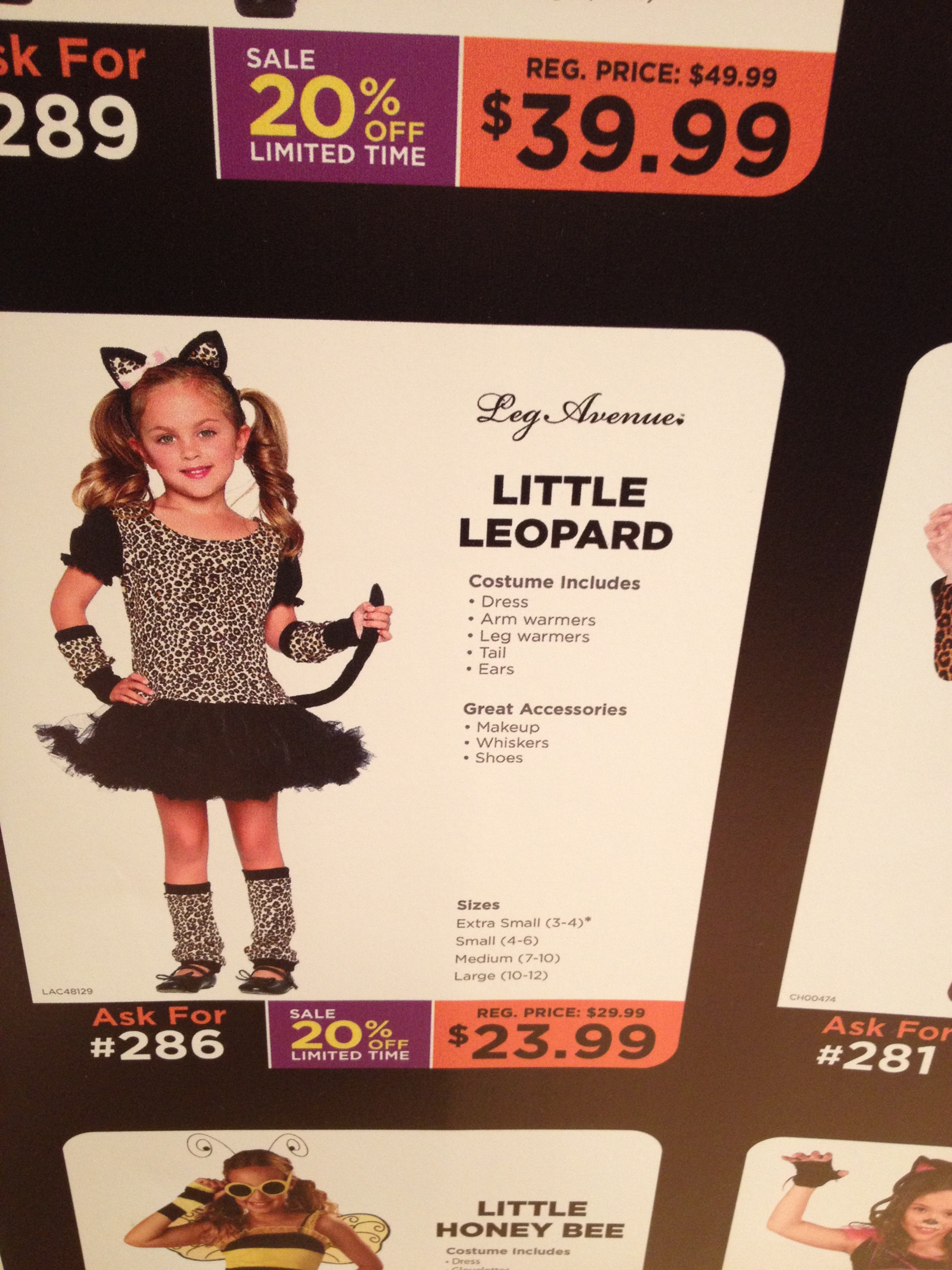
Little Leopard costume for girls ages 3 to 12.
When you see children’s classic Disney Princess costumes placed literally steps away from Sexy Disney Princess costumes, are you outraged?
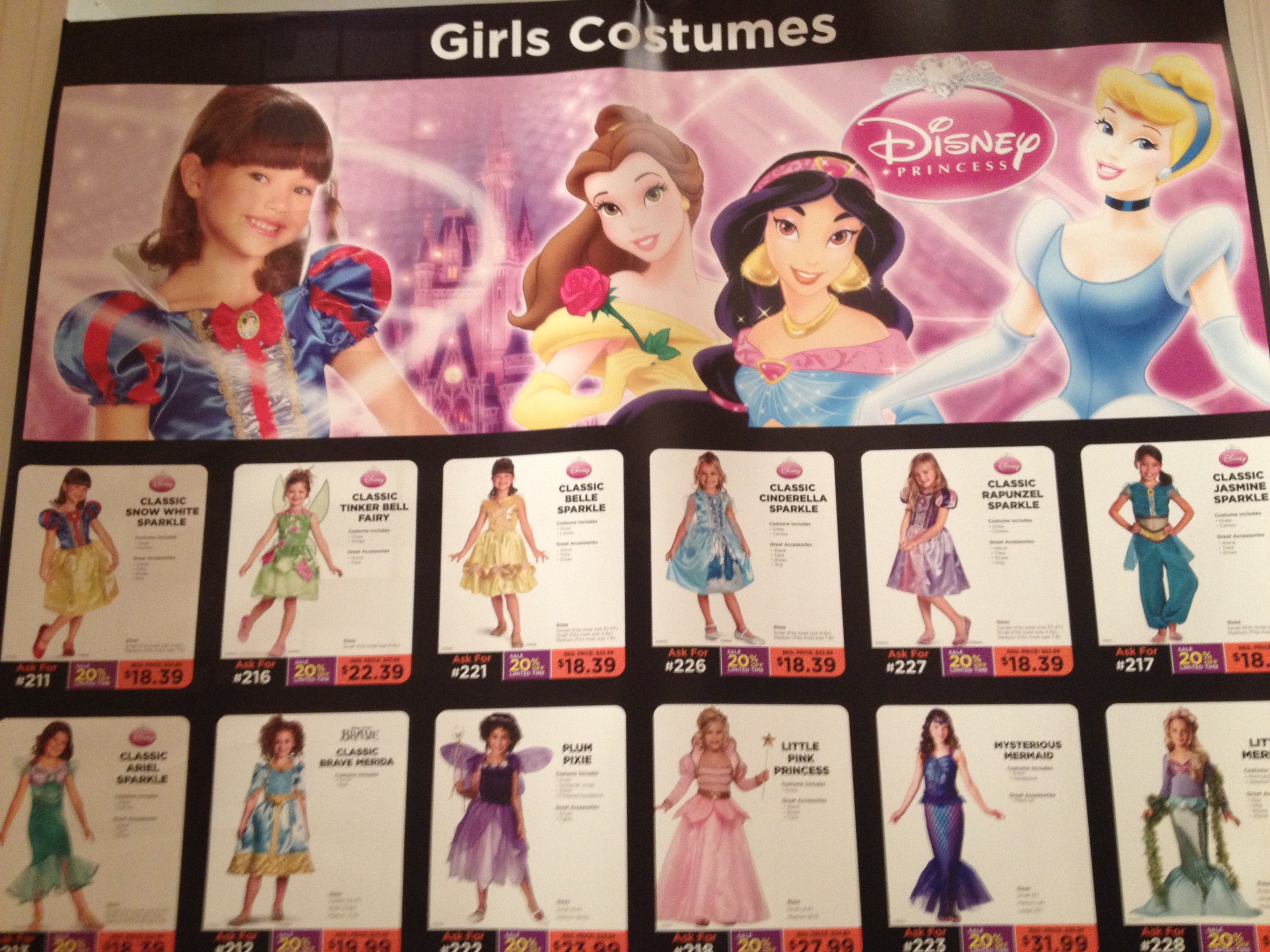
Classic Disney Princess costumes for young girls.

Sexy Disney Princess costumes.
When confronted with Monster High costumes for girls ages 4 to 14, are you appalled because they are far too sexy for our children?
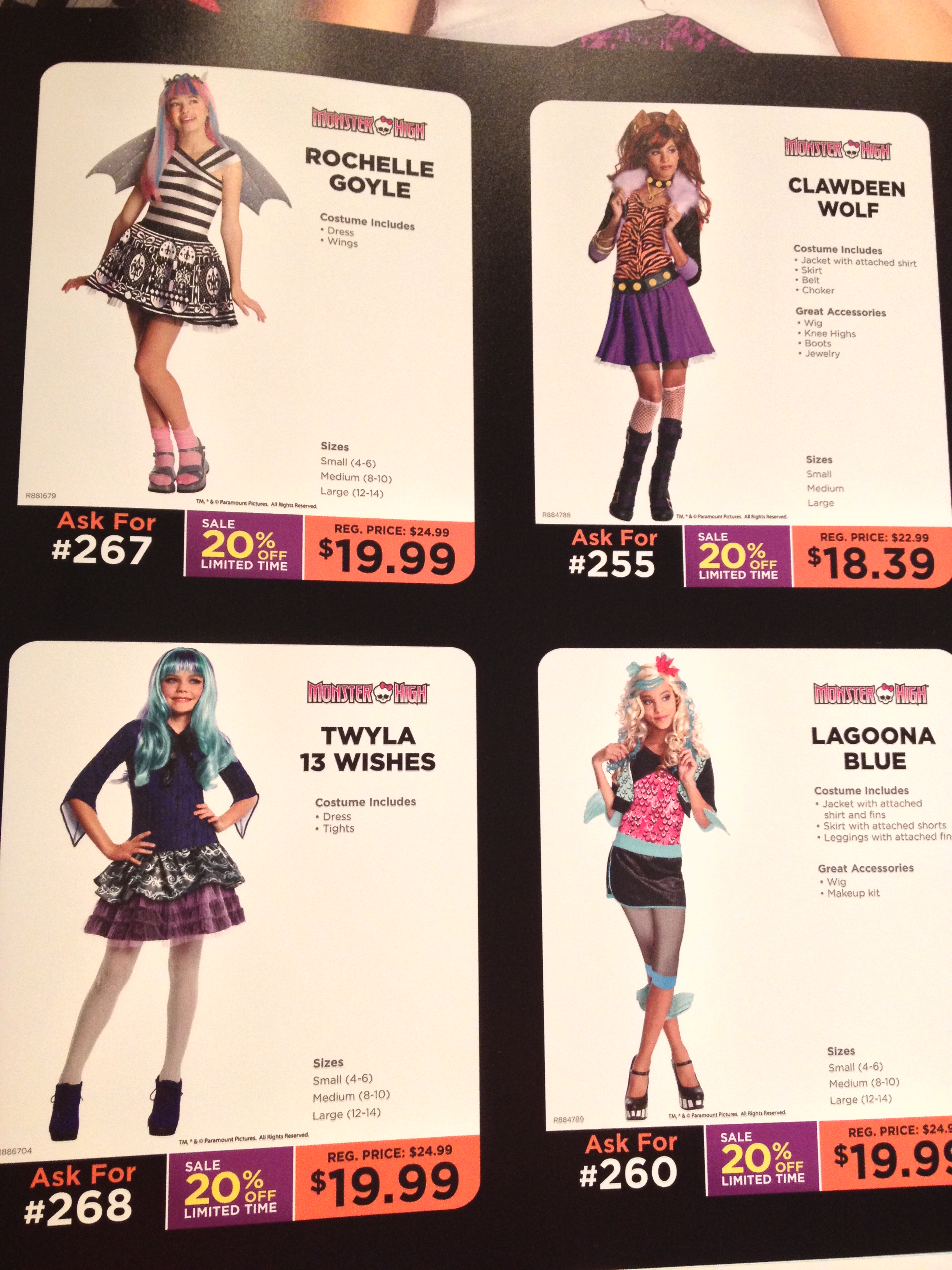
Monster High costumes for girls ages 4 to 14.

Then I’d like to point something out: You should object to the sexualized aesthetic of girls’ dolls, too. Read More
Disney’s Obamacare “inspiration” not as great as it sounds.
An article praising Disney World went viral on Facebook on Thursday. Brimming with excitement, the article reported that unlike companies that have cut part-time employees’ hours to avoid providing them with health insurance, Disney was “inspired”: Taking a “different approach,” Disney had offered 427 part-timers full-time employment. This laudable move made them eligible for health care under the Affordable Care Act.
The article, published by Addicting Info, explains:
“The offer was made to staffers who put in more than 1,500 hours in the past year, the threshold at which employers will be required to offer coverage, said Ed Chambers, president of the Service Trades Council, which represents 37,000 at Disney parks in Orlando… “Disney wants to be proactive. Disney is way out in front on this.””
This is the way all businesses should treat their employees. Disney World is already “the happiest place on Earth” for families. Now it’s proving to be one of the happiest places on Earth for people to go to work as well. And Obamacare is the reason why.
Finally, a positive story about a company doing the right thing! And what a better company to take the lead on this than Disney, which is known for making dreams come true? What a great thing, I thought–Disney is such a well-known and respected company that others might follow their lead.
And in fact, the public’s reactions have been incredibly positive, with outpourings of praise, support, and admiration for the company. For example, one commenter wrote:
My family will be skipping Seaworld vacations from now on and going out of our way to support Disney. These are human beings we are talking about…not dollar bills.
Another posted:
Thank you Disney, for leading the way to a better,healthier America . With all the shameful acts of some politicians ,its good to know that honer is still alive in this country.
Another commenter stated:
Good job Disney. It’s great to know there are still a few American corporations that still believe in America. I’ve never been to Disney World but maybe now is the time. Walt would be so proud!
And another:
Go out and support Disney!! Good for them! 🙂
Unfortunately, we have all been mislead by the reporting on Disney’s “inspiration” regarding the Affordable Care Act. It’s just not as good as it sounds. This article overstated the case in an irresponsible way, falling for the PR spin. It’s actually a case of corporate goodwashing. And because the article has gone viral, misleading information about Disney’s position is being spread–information that, to judge from the comments I’ve read, people are using to decide whether or not to vacation at Disney World.
So, here are the facts. Read More
Boys and girls and baby dolls
I am supposed to be working, but instead, I am eavesdropping as my four-year-old son, T., and his friend, N., play together with his two baby dolls, Sully and Buddy.
T. is walking around with Sully under his shirt. N. is trying her best to be patient. Finally, she asks, “Is Sully born yet????”
“No, not yet!” he sighs.
They climb into bed and pretend to sleep. Suddenly, N.’s baby doll, Buddy, wakes up. T. groans and says, “It’s the middle of the night!” –reenacting a common nighttime scene at our house. (He sounds just like his daddy!)
But then N. says, “No, actually, it’s morning!”, so everyone wakes up, chipper as can be. The kids stand on the bed and yell, “FAMILY JUUUUMP!” and jump across the room together.
T. notes that his harbor seal puppet, Pup, hasn’t had her baby yet, either. (There is a baby seal puppet stuffed inside her.) So they take a walk down the stairs to pass the time.
But the next thing I hear is, “Ouch ouch ouch!” and Pup’s baby is born. Minutes later, T.’s baby is born, too! The kids put all the babies to sleep quickly and expertly.
Later, the kids will bring the baby dolls downstairs for rides in T.’s toy trucks–but for now, N. declares, “I think it’s time for us to take a nap, too.”
With that, the kids are back in bed.
“Will you help me with my pillow?” N. asks. “I’m busy with my baby.”
“Okay,” T. replies amiably.
Moments later, T. proudly declares, “My baby knows how to jump.” Time for another “FAMILY JUUUUMP!!!” The air is full of baby dolls and gleeful kids. They are so happy.
And once again, I am happy that my little boy has a wide range of toys and friends in his life–including baby dolls and girl friends to play with.
—
Rebecca Hains is a media studies professor at Salem State University. Follow her on Facebook and Twitter
 Dr. Rebecca Hains
You must be logged in to post a comment.